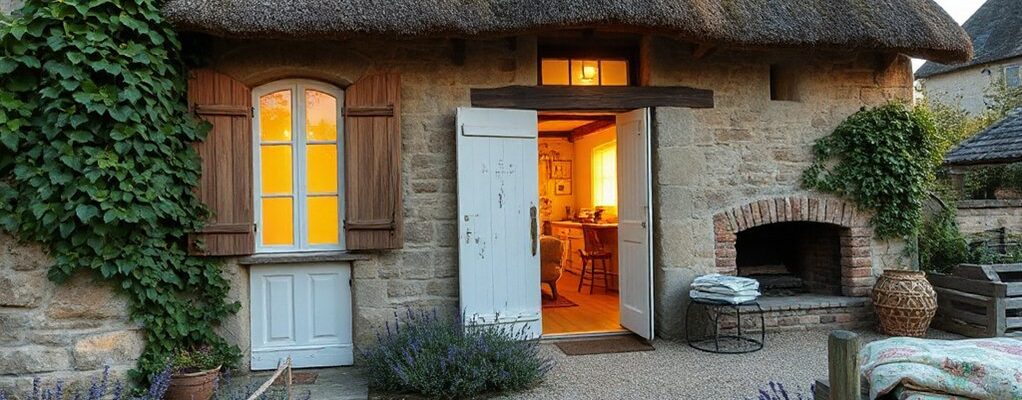
In a timber-framed cottage like many in Suffolk, you’ll want to start by tracing how the original beams tell its story before you decide what to change. You’ll balance repair with restraint, using traditional methods and locally sourced materials so the plaster and plasterwork breathe again. You’ll keep the charm by prioritizing reversible updates and discreet comfort upgrades, but a careful decision awaits that could redefine the house’s voice—and that choice could shape every corner you touch.
Key Takeaways
- Define the cottage’s character early and set achievable preservation goals prioritizing original layout, materials, and detailing.
- Plan in phases with documented budgets, permits, and reversible, minimal interventions to maintain authenticity.
- Use traditional methods and materials (lime mortars, timber repairs) and avoid modern substitutions that erode charm.
- Preserve and protect timber and masonry with noninvasive diagnostics and careful staging of reinforcements.
- Integrate discreet modern comforts and safety upgrades while highlighting original features and period-appropriate finishes.
Define Your Cottage’s Character and Restoration Goals
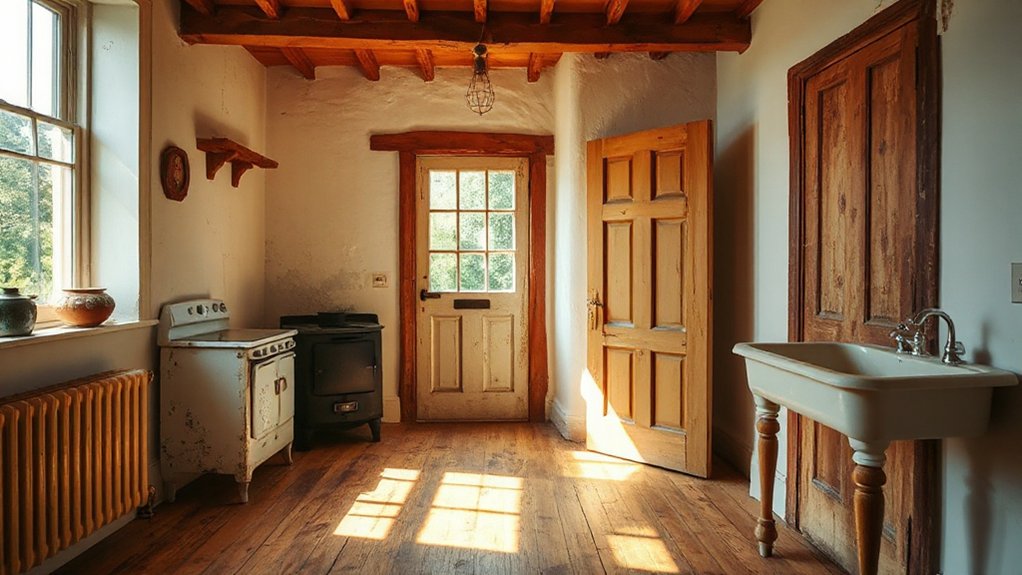
To define your cottage’s character and restoration goals, start by identifying the elements that give it its soul—original layout, materials, and detailing, as well as any quirks that define its charm.
You’ll map how these aspects influence today’s use, then translate them into specific, achievable objectives.
Prioritize integrity over imitation: preserve true scale, paneled doors, plaster-inset finishes, and timber framing where visible.
Clarify the balance between comfort and preservation, noting which features deserve restoration versus careful replacement.
Document interior decor choices that honor period aesthetics, while allowing modern lighting and storage imperatives to emerge unobtrusively.
Consider landscaping design as an extension of the house’s character, ensuring progression between indoors and outdoors support authentic, craft-based stewardship.
Assess Structural Safety Without Compromising Charm
You’ll assess structural integrity with a careful eye on existing timbers and masonry, honoring traditional craft while identifying real safety concerns.
Preserve the character by documenting grain, joints, and mortar as you plan repairs, ensuring enhancements stay true to the cottage’s lineage.
Balance safety with charm by prioritizing repairs that reinforce what’s there rather than replacing it, and frame decisions around safeguarding both people and place.
Inspect Structural Integrity
Careful assessment of a cottage’s frame and foundations starts with a clear map of risk: where wood shows rot, knots span too wide, or masonry shifts. You trace joints, check for hidden insect damage, and note sagging sills before touching bright aesthetics.
In a historically informed, craft-focused approach, you prioritize Foundation inspection to confirm timber integrity and mortar behavior without erasing character. A disciplined Load bearing assessment guides choices, distinguishing superficial flaws from structural weaknesses that demand attention.
You document deformations, plank gaps, and crown cracks, framing repairs within traditional methods and materials. Preserve charm by selecting sympathetic replacements—hand-hewn timbers, lime-based mortars, discreet reinforcement.
Communicate findings with precise drawings, so artisans respect proportion, grain, and rhythm while restoring strength.
Preserve Timbers And Masonry
Preserving timbers and masonry begins with a measured assessment of their condition, balancing where age adds character with where decay threatens safety. You inspect joints, beams, and wall cores for rot, splits, and moisture ingress, noting historic fastenings and lime mortar remains.
Prioritize noninvasive diagnostics: moisture meters, soundings, and crack mapping guide decisions without erasing provenance.
Timber preservation means stabilizing moisture, avoiding over-assembly, and selecting compatible repair methods that respect timber species and seasoning.
For masonry restoration, preserve original tooling and texture, clean without leaching salts, and repoint with traditional lime mortars to maintain breathability.
Document findings, label deformations, and plan staged reinforcements that retain aesthetic patina.
Your goal is durable safety that honors craftsmanship and the cottage’s enduring charm.
Balance Safety With Charm
When balancing safety with charm, you assess structure with care for both load-bearing integrity and the cottage’s character. You prioritize solid foundations, clear junctions, and discreet modernization that respects timber, plaster, and masonry.
Evaluate the roof frame for secure fastenings, guarantee authentic infill remains breathable, and keep joinery true to period methods while meeting today’s standards.
Integrate fire safety without sacrificing patina: use rated materials, install discreet detectors, and plan escape routes that don’t visually clobber historic lines.
For security upgrades, employ unobtrusive hardware and lighting that deter intrusion yet fade into the setting.
Document changes, preserve original textures, and test alterations under existing loads.
Balance caution with craft, so enhancements strengthen longevity while preserving the cottage’s intimate, handcrafted voice.
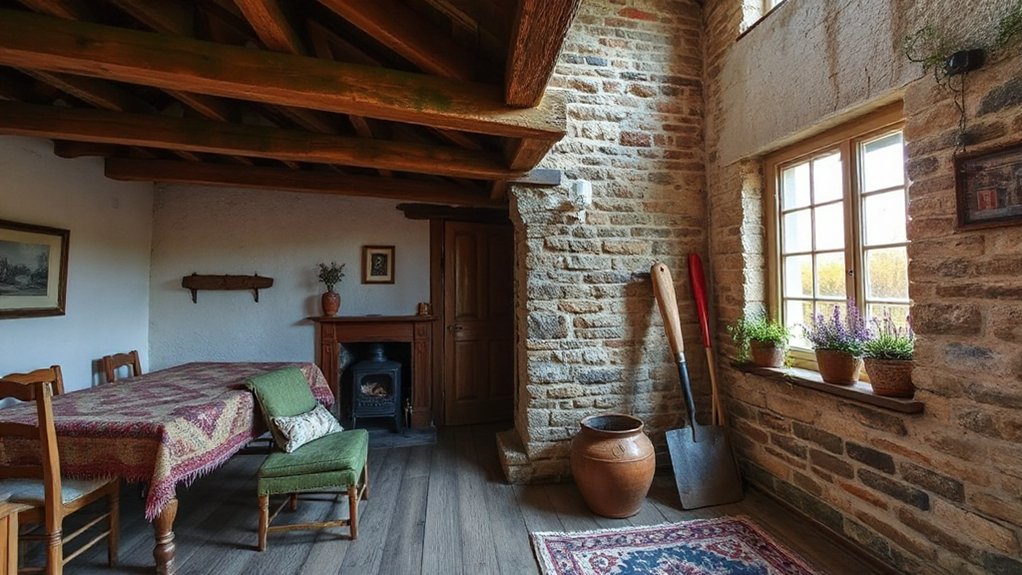
Protect and Highlight Original Timber Beams
How do you protect and highlight the original timber beams without masking their history? You approach beam protection with respect for craft and age, not sterility. Begin by evaluating timber condition, noting cracks, tool marks, and joinery.
Prioritize breathable, compatible products that prevent moisture stagnation, avoiding hard coatings that trap decay. Clean gently with a soft brush, then address active rot or insect attack through discreet stabilization rather than wholesale replacement.
When you expose beams, do so selectively, preserving patina and tool traces that tell a cottage story. Apply clear, non-gloss finishes sparingly to enhance warmth without glossing history.
Document alterations for future caretakers, because timber preservation hinges on informed, restrained intervention. For structural care, plan beam restoration alongside framing, never in isolation.
Choose Period-Appropriate Materials for Modern Comfort
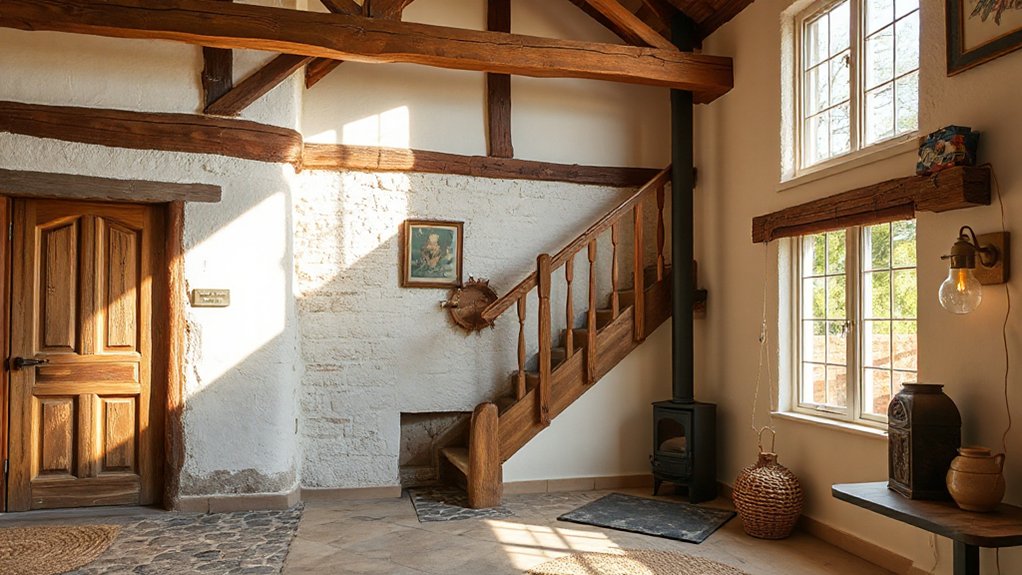
Choosing period-appropriate materials for modern comfort means sourcing options that respect the cottage’s age while delivering reliable performance. You’ll prioritize authentic textures, joinery, and finishes that echo the past without compromising today’s usability.
Select timber, brick, and plaster that reflect local sourcing and traditional techniques, ensuring durability and proportionate patina. Favor finishes that patinate gracefully, avoiding synthetic-looking substitutes that break the historical rhythm.
When you assess hardware, opt for latches, hinges, and nails that read as vintage but function with contemporary reliability. Prioritize historical accuracy in detailing—cornices, moldings, and paneling should trace legitimate epochs.
For material sourcing, build relationships with reputable suppliers who specialize in restoration-grade products, and document each choice to support conservation records. This disciplined approach preserves character while delivering comfortable, dependable living spaces.
Improve Insulation and Ventilation While Preserving Aesthetics
You can balance comfort with craft by choosing eco-friendly insulation that fits behind historic fabrics and plaster without altering your cottage’s silhouette.
Emphasize natural ventilation techniques—like controllable chimneys, cross-venting, and discreet vents—that respect original airflows and seasonal drafts.
Let aesthetic-driven material choices—timber, lime plaster, and breathable wraps—guide every upgrade, so performance enhances charm rather than betrays it.
Eco-Friendly Insulation Options
Eco-friendly insulation choices marry performance with preservation, so you can tighten a cottage’s envelope without compromising its character. You prioritize materials and methods that align with historical sensibilities while delivering modern comfort.
Choose breathable, performance-grade options that won’t trap moisture or destroy historic fabric. Reclaimed or locally sourced fibers and boards honor craft traditions, and you’ll find that every layer has a purpose, from air-tight wraps to interior fleece linings.
Prefer mineral wool, cellulose, or natural fiber batts installed with careful detail to avoid gaps. Emphasize air sealing at least as much as bulk insulation, since tight envelopes preserve warmth without visible intrusion.
Sustainable materials and eco-conscious methods keep the house true to its era while performing reliably.
Natural Ventilation Techniques
Natural ventilation can enhance comfort and air quality without compromising a cottage’s character, so you’ll breathe easier while preserving its fabric. You’ll approach this with methods that honor historic layouts and timber details, prioritizing discreet upgrades over disruptive changes.
Use passive cooling by aligning shaded openings with prevailing breezes, letting summer heat drift out through high casements and cool air enter via lower ventilators. Cross ventilation becomes practical when interior rooms are designed or opened to encourage airflow, not to antagonize existing partitions.
Preserve lath-and-plaster ceilings by avoiding heavy ductwork, instead choosing slim, surface-mounted solutions that blend with trim. When possible, install operable transoms above doors to capture rising heat.
Implement shutters and screens to modulate drafts without compromising light or silhouette.
Aesthetic-Driven Materials Choice
When choosing materials, prioritize options that boost insulation and airflow without betraying the cottage’s character. You’ll balance modern performance with handcrafted texture, selecting locally sourced timber, lime plaster, and breathable stone where appropriate.
Emphasize airtight but discreet junctions, using traditional beadings and mortar mixes that respect-era proportions. Prioritize materials that age gracefully, offering thermal mass without compromising charm.
Decorative accents should echo period details—exposed beams, wattle-and-daub textures, and carved moldings—while still serving function.
Consider color palettes that complement historic plasters and timber, favoring muted earth tones and lime-washed whites to reflect original schemes.
Use double-glazed sashes behind historic frames when feasible, preserving sightlines and daylight.
Document finishes to aid future restoration, ensuring replacements match texture, patina, and scale.
Restore Roof, Walls, and Exterior Finishes Authentically
Preserve timber framing or stucco rhythms, repair with lime-based mortars, and reveal learnings from historic scansion rather than erasing it. For paint and siding, select palettes that echo period chronicles and weather-friendly finishes that resist modern wear.
Where windows and doors appear, restore their profiles with authentic muntins and joinery, avoiding overmodern replacements. Integrate garden landscaping and careful site work to harmonize the exterior with interior decorating cues, maintaining flow between indoors and out.
Preserve character, enhance longevity, and respect the cottage’s lineage.
Illuminate With Authentic, Modern-Friendly Lighting
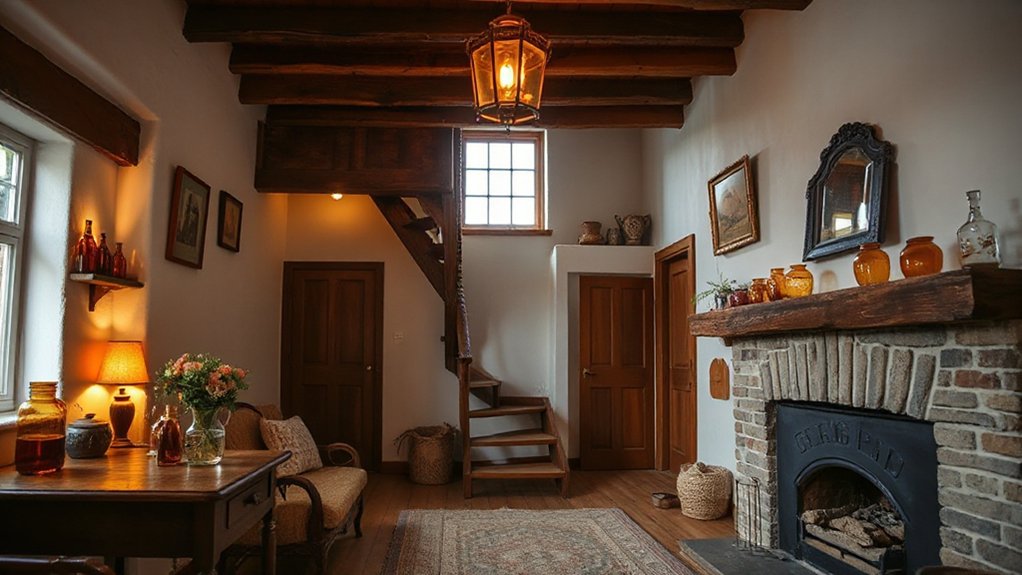
You’ll start by shaping an ambient glow that respects period character while keeping modern usability in reach. Consider vintage fixtures thoughtfully modernized, so LEDs glow softly without shouting “reproduction,” and details read as authentic instead of fussy.
Map a layered lighting plan that balances task, accent, and atmosphere, guiding the eye to architectural features rather than obscuring them.
Ambient Glow Strategies
Ambient glow isn’t about flashy fixtures but about how light reveals texture and atmosphere, so start with a warm baseline and layer in subtle accents that feel authentic to the cottage’s history.
You’ll shape illumination by emphasizing natural materials: honeyed wood, plaster, and exposed beams. Choose fixtures with softened edges and historical cues, ensuring unseen ceilings hide sources that glare or cast harsh shadows.
Use dimmers to modulate mood, preserving the flicker of older fires while supporting modern practicality. Fireplace ambiance should feel inviting yet restrained, drawing focus to timber mantles and brickwork rather than chrome.
For outdoor lighting, keep fixtures low-profile and warm, guiding paths without overpowering interiors. The result honors craft, balances function, and sustains the home’s timeless charm.
Vintage Fixtures Modernized
Vintage fixtures shouldn’t shout their era; they should speak with the quiet authority of the cottage itself. You’ll honor the fabric by selecting preserved or reproduction pieces that nod to history yet read as approachable, not precious. Seek brass or wrought-iron silhouettes with clear, period-appropriate glass, and pair them with bulbs that echo warm, amber glow rather than stark modern brightness.
Modernized lighting should reinforce architecture rather than erase it, so install fixtures where they serve function—kitchens, hallways, porches—without dominating trim details. Keep wiring discreet and code-compliant, preserving original switches where feasible.
Emphasize scale, proportion, and finish to integrate seamlessly with plaster, woodwork, and cabinetry. Vintage fixtures maintain character; Modernized lighting enhances usability, comfort, and longevity without compromising the cottage’s voice.
Layered Lighting Plan
Layered lighting should weave warmth, texture, and function into every corner of a cottage, letting authentic fixtures and modern controls work in harmony. You’ll design zones that honor scale, from parlour to kitchen, using warm, dimmable bulbs and low-profile fittings that echo timber and plaster.
Start with a gentle ambient layer, then add task lighting at counters and reading nooks, and finish with accent highlights that celebrate architectural details.
Choose fixtures with period-appropriate profiles, but pair them with smart technology for reliable control, scheduling, and scene-setting. Keep cables hidden, switches unobtrusive, and power draws modest to preserve energy.
This approach blends preservation-minded craft with energy efficiency, ensuring luminous comfort without compromising the cottage’s enduring charm.
Budget and Plan Phased Improvements
A practical budget sets the pace for your phased improvements, guiding what you restore first and what you can tackle later. You plan with restraint, honoring historic fabric and labor realities, not flashy shortcuts. Begin with essential structural stabilizers—weatherproofing, insulation, and sound timber repairs—then allocate funds to documented historical features.
Create a chronological queue that pairs high-impact restorations with long-term goals, preventing scope creep. Use prodigious note-taking: costs, vendor reliability, and bid comparisons, all anchored to period accuracy. Prioritize rooms and details that reveal your cottage’s character, avoiding trendy substitutions.
Consider garden landscaping and interior furniture as future embellishments, not afterthoughts. Your phased plan should be auditable, flexible, and anchored in preservation-minded decisions that maintain authenticity while enabling steady progress.
Navigate Permissions and Preservation Guidelines
Managing permissions and preservation guidelines starts with a clear map of the regulatory landscape: consult your local historic preservation office, planning department, and any overlay districts early, so approvals don’t derail your schedule.
You’ll assess how building permits and zoning regulations shape your design, especially for massing, materials, and setbacks.
Document the cottage’s character-defining features and anticipated changes, then align them with preservation standards to improve review efficiency.
Engage early with reviewers, anticipate questions, and provide paired illustrations—existing vs. proposed—highlighting humbler, period-appropriate choices.
Respect neighborhood context and prioritise minimal impact, reversible interventions where possible, and durable solutions.
Track milestones, adjust timelines, and keep focused on authentic craft, avoiding unnecessary modern substitutions that compromise historic integrity.
Maintain the Cottage for Lasting Charm
As you keep the cottage’s charm intact, you’ll build on the groundwork of permissions and preservation by weaving ongoing maintenance into its daily rhythm. You approach maintenance like a restorationist, not a quick fix, prioritizing authentic materials and proven techniques.
Schedule seasonal checks for roof, masonry, and timber, and document findings to guide future work. Gentle cleaning, controlled ventilation, and humidity management protect paint, plaster, and wallpaper without eroding character.
Gardening ideas influence exterior care: prune heritage fruit trees, mulch with natural fibers, and plant natives to sustain surrounding fabric.
Interior decorating stays faithful yet purposeful—choose finishes that patinate over time and reveal age, not disguise it. Preserve craft details, repair rather than replace, and keep records for the next generation of caretakers.
Maintain consistency, respect history, and charm endures.
Frequently Asked Questions
How to Assess Charm Without Over-Restoring Historic Features?
You assess charm by prioritizing historical accuracy and authentic restoration, preserving patina, tactful patina, and original grain. You blend period materials with modern comfort, document decisions, and avoid over-restoration, letting authentic cues guide your craft-centered renovation choices.
Can Modern Kitchens Fit Into a Period-Cottage Layout?
Yes, you can fit a modern kitchen into a period-cottage layout, prioritizing vintage decor and craft-focused details while concealing or integrating modern appliances behind Shaker cabinetry and discreet panels, preserving historical proportions and preservation-minded charm throughout.
What Are Cost-Effective Ways to Retrofit Insulation Discreetly?
Insulation materials offer savings, but you’ll notice them fast, like a cloak of warmth. You retrofit techniques carefully, preserving reveals and plaster. You’ll cut drafts, seal joints, and layer discreet, historically respectful insulation into existing walls.
How to Choose Energy-Efficient Windows That Match Style?
Choose energy-efficient windows with authentic profiles and true muntins, matching your cottage’s era. Opt eco-friendly materials, guarantee proper installation, and plan for window maintenance to preserve charm while reducing drafts and improving insulation.
Which Professionals Best Balance Craft and Regulations?
You should work with architects and restoration specialists who balance craft and regulations, ensuring architectural authenticity and adherence to preservation guidelines, so your project respects history while meeting modern standards. They translate tradition into compliant, craft-forward solutions you can trust.
Conclusion
Preserve the past by letting it guide every choice you make. You’ll gain character, not compromise, by choosing reversible updates and traditional methods—like lime plaster and hand-hewn timbers—so the cottage breathes with you, not at the cost of it. Consider that homes with period-appropriate detailing can reduce energy costs by up to 15% when properly ventilated and insulated, a practical reflection of careful craft meeting modern comfort. Your restoration becomes a living story, not a museum.