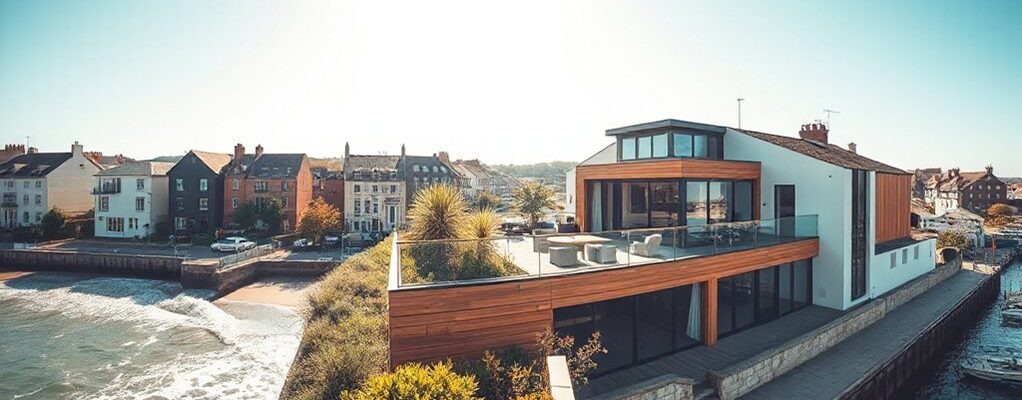
Coastal life demands extensions built for salt spray, humidity, and shifting soil, so you’ll want weather-ready framing, galvanised fasteners, and treated timber. Elevate the structure, guarantee drainage, and keep damp at bay with robust membranes. Let large, high-performance windows frame the sea views while staying energy-smart. Layer in sustainable landscaping and permeable surfaces to protect the shoreline and your investment, then explore layouts that balance light with practicality as you approach the next steps.
How Coastal Conditions Shape Your Brighton Extension Decisions
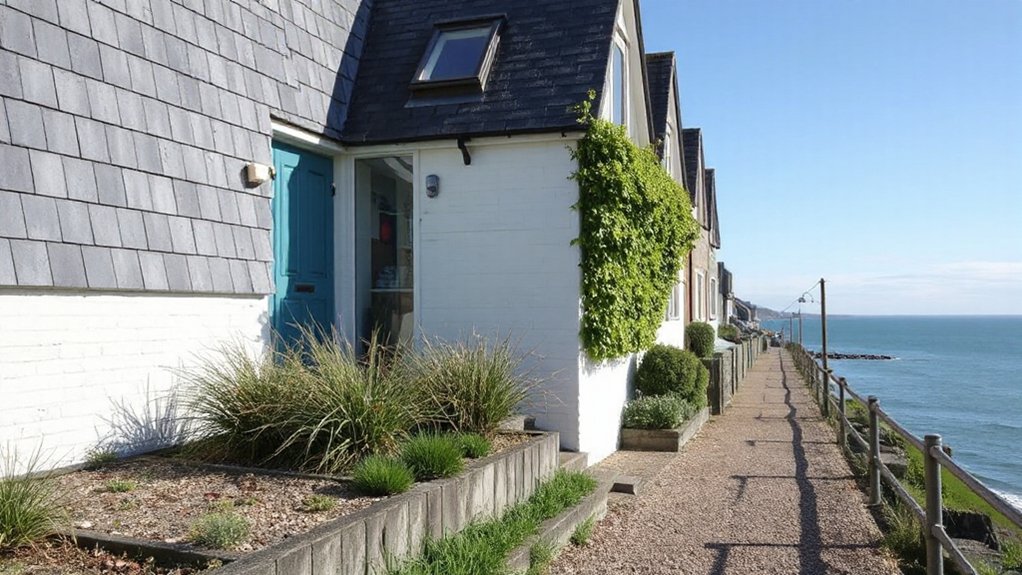
Coastal conditions don’t just affect aesthetics—they drive the fundamentals of your Brighton extension. You’ll choose foundations, framing, and finishes that tolerate salt spray, humidity, and shifting soils.
Start with a seawater-aware backdrop: elevated thresholds, slip-resistant finishes, and moisture management to reduce damp.
Prioritize corrosion prevention in metal components with galvanization, protective coatings, and stainless steel where feasible.
For timber, select naturally durable species, treated connections, and ventilated cavities to minimize rot.
Wind resilience matters too: secure tie-downs, bracing, and aerodynamic roof forms that reduce wind uplift.
Align insulation, ventilation, and airtight detailing with coastal temperate cycles to prevent condensation.
Plan drainage to handle tidal runoff and splash zones.
Finally, factor maintenance access into layout so inspections stay straightforward over time.
Choosing Weather-Ready Materials for Seaside Homes
Choosing weather-ready materials for seaside homes isn’t optional when you’re designing on a coast. You’ll prioritize durability, low maintenance, and moisture resistance to stand up to salt spray, wind, and shifting sands.
Start with framing and cladding that resist corrosion and decay, opting for treated timber, composite alternatives, or steel where appropriate.
Flooring should tolerate humidity with sealed, non-slip finishes, while roofs favor corrosion-resistant metals or treated shingles.
Fasteners and fixings must be corrosion-proof to prevent hidden failures.
Materials chosen help control thermal expansion and air leakage, improving energy efficiency in variable coastal conditions.
Consider coastal erosion patterns and Marine flora in designing foundations and drainage, ensuring slope stability and proper runoff.
Select finishes that resist fading from sun and salt, preserving appearance year after year.
Maximizing Light While Preventing Damp in Coastal Houses
To maximize light without inviting damp, plan window placement and glazing that prioritize daylighting while controlling humidity and condensation. You’ll want a mix of large, low-iron panes for brightness and smaller high-performance units for heat and moisture control.
Choose insulated glazing units with warm edge spacers and low emissivity coatings to reduce condensation on cold mornings.
Position openings to cross-ventilate during dry spells, and pair this with trickle vents on quieter days.
Install humidity-aware blind systems or automated shading to manage glare without trapping moisture.
Use continuous soffits and vented facades where possible, and seal penetrations meticulously to prevent damp ingress.
Monitor indoor humidity, and refine ventilation solutions seasonally to sustain bright interiors without damp risks.
Seaside-Friendly Extension Styles for Brighton-Life
You’ll start with seaside-ready materials that resist salt and moisture while keeping maintenance low.
Prioritize salt-safe structural design, so framing and fasteners handle coastal winds and corrosion without compromising safety.
Use coastal-style light maximization to brighten spaces while preserving weather-tightness and daylight control.
Seaside-Ready Materials
Seaside-ready materials matter as much for durability as for vibe, so pick coatings, cladding, and fasteners that shrug off salt spray, humidity, and wind-driven sand.
Choose weatherproof paints in light, reflective tones to reduce heat gain while resisting fade. Cladding should be rot- and corrosion-resistant—think treated timber with marine-grade sealants or fiber cement panels.
Fasteners deserve stainless steel or coated options to prevent rust streaks. For insulation, opt for breathable barriers and rigid foam with vapor control to maintain comfort without moisture buildup.
Surface textures matter too: embossed or grainy finishes hide grime from coastal winds.
Plan around Seaside landscaping and Coastal interior decor, pairing durable materials with low-maintenance landscaping to keep pathways clean and extensions visually cohesive.
Prioritize long-term performance over quick fixes.
Salt-Safe Structural Design
Could salt spray and wind-driven corrosion derail your Brighton-life extension, or can you design to weather it gracefully? You’ll prioritize corrosion‑resistant materials for framing and fasteners, choosing stainless steel or galvanized steel with protective coatings, plus treated timber where appropriate.
Optimize joinery with sealed, slip‑joint details to prevent moisture ingress and freeze–thaw damage. Use salt‑resistant paints on exterior cladding and metal elements, and apply protective primers to every new surface.
Consider reinforced concrete or brick with breathable, water‑stopping barriers to reduce capillary rise. Plan drainage to redirect splash zones away from critical connections, and install corrosion‑resistant hardware like hinges and anchors.
Finally, specify continuous sealants at joints and regular maintenance intervals so your seaside extension stays durable and visually cohesive.
Coastal-Style Light Maximization
Natural light is your best coastal ally, so design with clear sightlines and reflective surfaces that bounce sun deeper into the home while keeping glare manageable. In Brighton-life terms, optimize room geometry first: align windows with living zones, use light shelves, and install low-contrast frames to reduce visual noise.
Choose finishes that reflect but soften: pale timber, terrazzo, and glazed tiles that bounce daylight without harsh hotspots. Prioritize moisture-resistant, low-maintenance materials for coastal humidities.
Layer lighting strategically—ambient ceilings, task lamps, and subtle wall washes—to extend daylight into evenings. Consider coastal flora-inspired palettes to convey airiness while masking salt spray exposure.
Acknowledge the climate: plan for Marine pollution-resistant detailing and easy-clean exterior features. Finish with energy-efficient glazing and shading that preserve brightness without overheating.
Smart Layouts: Storage, Flow, and Future-Proofing
Smart layouts balance storage, flow, and future-proofing so your coastal home remains organized and adaptable as needs change. You’ll optimize every inch by pairing innovative storage ideas with flexible layouts that adapt to family size, hobbies, or guests.
Start with hidden compartments in benches, stairs, and alcoves to reclaim floor space without compromising accessibility. Use modular furniture that reconfigures for entertaining or daily routines, and plan traffic patterns that avoid bottlenecks near wet zones.
Consider zoned lighting and outlets to support work, relaxation, or reading nooks without clutter. Build future-proofing in from day one: scalable wardrobe rails, adaptable kitchen islands, and reinforced walls for potential extensions.
Stay mindful of moisture-friendly materials and easy-clean finishes to maintain long-term value.
Costs, Permits, and Planning Tips for Coastal Extensions
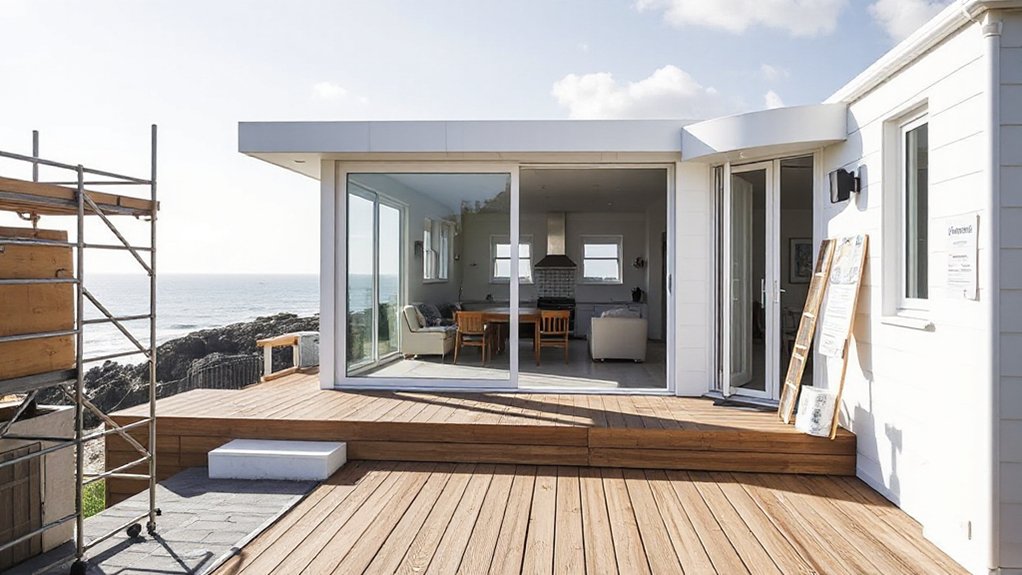
Balancing smart layouts with a coastal extension hinges on clear cost estimates, permit awareness, and practical planning. You’ll map out a realistic budget early, including foundation, weatherproofing, materials, and contingency.
Check local authorities for permit timing, setback rules, and any coastal protection requirements; apply early to avoid delays. When budgeting, include professional fees for surveys, structural tweaks, and drainage engineering to prevent future headaches.
Seaside landscaping should be planned within the same permit window, selecting salt-tolerant plants and permeable surfaces to reduce runoff.
For Marine pollution risk, specify spill kits and construction best practices, and plan disposal routes to approved facilities.
Prioritize phased work if funds or permits stall, and document changes to maintain coastal compliance and value.
Frequently Asked Questions
How Do Sea Breezes Affect Insulation Choices?
Sea breeze effects influence insulation choices by increasing humidity and outdoor temperature swings, so you prioritize moisture-resistant materials and vapor barriers. Insulation material considerations: opt for closed-cell foam or mineral wool, plus breathable membranes to balance dew points and efficiency.
Can You Build Above Flood Levels Without a Permit?
Starting bolt-tight, you can’t climb above flood levels without permits. Flood risk rises if you skip approvals. You must obtain Building permits first, then plan elevations; otherwise, insurance and fines bite. Plan meticulously, stay compliant, and build smarter.
What Retrofits Prevent Salt Corrosion on Fittings?
You should use salt resistant materials and implement corrosion prevention strategies like polymer coatings and galvanic isolation, then treat fittings with sealants and proper closure methods to deter salt air damage and extend longevity.
Are There Coastal-Specific Warranty Considerations I Should Know?
Yes—coastal warranties often exclude marine corrosion effects; verify coverage limits, exclusions, and renewal terms. In marine environments, you’ll want corrosion-resistant materials and documented maintenance. Confirm transferability, failure remediation timelines, and whether warranty coverage applies to extensions.
How Can Extensions Impact Property Resale Value Near the Coast?
Like a well-tuned compass, your coastal extension boosts resale by enhancing Coastal aesthetic and Extension design, attracting buyers who value light, sea views, and durable materials, while minimizing maintenance; plan locks in value and age gracefully.
Conclusion
This guide gives you a rock-solid game plan for Brighton extensions that endure sea spray and shifting soils without sacrificing style. Choose corrosion-resistant framing, galvanized fixings, and treated timber, then elevate and seal with watertight detailing and proper drainage. Maximize light with large, coastal-smart glazing while keeping damp at bay through skilled moisture management and permeable landscaping. Start with smart storage, scalable layouts, and future-proofing ideas—your seaside extension will stand tall, weather-proof, and enduring, like a hero against salt and wind. Hyperbole: indestructible.