Buying a new-build can offer modern design, better energy efficiency, and fewer immediate repairs, but it comes with higher upfront costs and potential delays. You’ll weigh customization limits, long-term operating costs, and resale value against location, amenities, and market timing. With builders holding leverage and financing nuances to navigate, you’ll want a clear decision framework to determine if the promise fits your lifestyle and financial goals—before you commit.
Key Takeaways
- New builds offer tighter construction, energy-efficient systems, and modern design, reducing maintenance and potentially lowering utility bills.
- They provide predictable warranties, documented performance data, and easier future upgrades, though customization is often limited to finishes.
- Upfront costs include higher purchase price and various fees, while resale value depends on market demand and design longevity.
- Negotiation leverage is limited; incentives exist but are not guaranteed, and timelines can be affected by supply constraints.
- Location and community factors matter: proximity to amenities, HOA rules, and future growth influence long-term satisfaction and value.
How a New-Build Differs From Existing Homes
Buying a new-build differs from purchasing an existing home in several key ways. You’ll see tighter construction standards, newer systems, and fewer deferred maintenance issues, which translate to lower repair risk in the short term.
Energy performance often outpaces older homes due to upgraded insulation, windows, and HVAC design.
Customization is typically limited to builder options, not full renovations, so you should expect driven timelines and process steps rather than on-the-fly changes.
Resale value depends on market demand for new builds, sometimes offering depreciation advantages in early years.
If you value a sense of vintage charm or historic significance, you may find it lacking in speculative projects, though some communities blend period cues with modern efficiency.
The Immediate Appeal: Modern Design and Efficiency
The immediate appeal of a new-build lies in its modern design and energy efficiency, which deliver clear, measurable benefits from day one. You’ll notice improved interior lighting with thoughtfully placed fixtures and high-efficiency LEDs that reduce monthly costs and enhance task visibility.
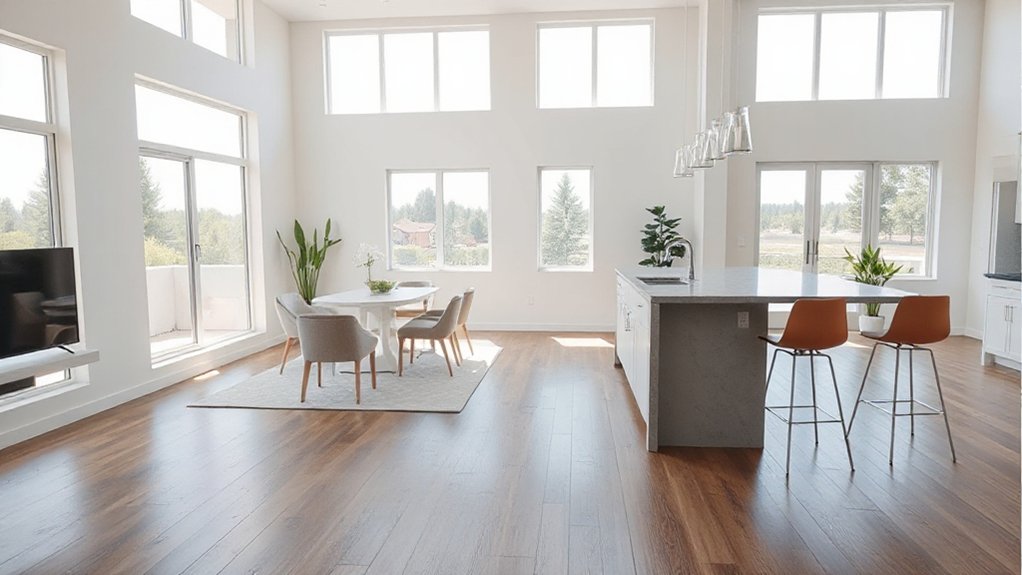
Open-plan layouts optimize natural light, supporting daylighting strategies that lower reliance on artificial light. Modern HVAC, tight construction, and advanced insulation curb heat loss, yielding consistent comfort and lower energy bills.
For practical value, developers integrate smart controls that adjust lighting, shades, and climate settings by occupancy, boosting efficiency further.
Exterior considerations matter too: Landscaping design often uses drought-tolerant plantings and permeable surfaces to manage runoff and maintenance.
What Upfront Costs to Expect in a New-Build
When you’re budgeting a new-build, several upfront costs require careful planning beyond the sticker price. First, financing matters: loan origination fees, appraisal, and closing costs typically total 2–5% of the purchase price, depending on lender and region.
Next, lot premiums and site work vary by neighborhood and terrain, affecting utility trenching, grading, and drainage.
Build-time allowances exist for interior fixtures and finishes, but these can fluctuate with market conditions, so lock in selections early.
Landscaping design and exterior improvements often carry separate costs, including irrigation and hardscape elements.
Don’t overlook temporary living expenses if you relocate during construction.
Finally, consider upgrade options and contingency reserves to absorb changes.
A clear budget reduces surprises and supports smoother, data-driven decision-making.
Long-Term Operating Costs and Resale Value
Look for builder-added efficiency features—high insulation, tight envelopes, efficient HVAC, and smart controls—as these cut energy use without sacrificing comfort. Over the years, transparent performance data, like energy ratings and warranty coverage, strengthens resale potential by signaling lower risk to buyers.
Maintenance costs also trend lower when systems are modern and well-documented at purchase. Consider long-term scenarios: how utility prices rise, how renovation costs compare to new builds, and whether the home’s design sustains appeal with evolving buyer preferences.
Why Builders Have Leverage: Limited Negotiation Power
Builders often have leverage in negotiations due to supply constraints, pricing discipline, and fixed-start timelines. You’ll notice limited room for aggressive price cuts when demand remains solid and inventories are tight.
While some incentives exist, they’re often conditional on timing, lot selection, or rate lock periods, not broad price reductions. Your leverage hinges on understanding how builder reputation and project scale influence concessions; larger, well-reviewed developments can offer modest upgrades or closing-cost support, whereas less established builders may not.
Construction permits and regulatory timelines shape what’s possible, constraining changes midstream and delaying closing if you push aggressively. Track historical permit approval speeds and reputational signals to gauge risk and expected negotiation power.
Customization Rules: What You Can and Can’t Change
Customization rules set clear boundaries: you can tailor finishes and fixtures, but major structural or layout changes are typically restricted. In practice, builders allow selections within predefined packages, trackable through change orders and cost overlays. You’ll see tradeoffs between customization depth and timeline impact, since approvals and material sourcing can slow construction.
Data shows most projects cap wall locations, plumbing routes, and electrical layouts to maintain structural integrity and warranty coverage. Interior lighting and landscaping design often have flexible interfaces, yet options are finite and priced transparently.
Decisions preapproval reduce risk, but may constrain future resale flexibility if tastes shift. Evaluate which upgrades drive perceived value versus unnecessary complexity, then prioritize high-visibility, enduring choices with strong longevity and maintenance implications.
Planning for Construction: Timelines, Delays, and Milestones
Planning for construction hinges on clear timelines, realistic milestones, and an honest assessment of potential delays. You’ll start with a detailed schedule that maps permitting, site prep, framing, and inspections.
Build in buffers for weather, supply chain hiccups, and subcontractor availability so you can manage expectations with lenders and buyers.
Track progress weekly, updating milestones as you confirm approvals and permit statuses.
Key inputs include construction permits and site accessibility, which directly influence readiness for work crews and equipment.
Use data to forecast finish dates, then tighten plans as milestones shift.
Communicate changes promptly to avoid budget overruns.
Finally, couple the timeline with risk registers that flag critical path tasks and fallback options if approvals stall.
This disciplined approach minimizes surprises and sustains momentum.
Warranties and Quality: What Builders Guarantee and How to Inspect
When you buy a new-build, you’re protected by a set of warranties that can vary by jurisdiction and builder, but they typically cover structural, workmanship, and systems defects for defined periods. In practice, you should quantify what’s included: warranty coverage often spans major components for 10 years, with shorter terms for workmanship and materials.
You’ll want documentation detailing what isn’t covered and the process for claims, including timelines and required notifications. Use an evidence-based approach to quality: track defect frequency by category, median repair times, and acceptance criteria.
Before closing, run an Inspection checklist that covers drywall, flooring, plumbing, electrical, HVAC, and insulation. Prioritize fixes with safety implications and document all issues with photos, dates, and responses to avoid disputes later.
Is the Community Right for You? Amenities and Neighborhood Fit
To assess community fit, you’ll compare amenity offerings against your lifestyle needs and budget, using a straightforward checklist of what’s actually delivered.
Look at proximity to work, schools, and services, then verify hours, upkeep, and capacity through data like walkability scores and HOA reports.
This data-driven lens helps you weigh whether the neighborhood’s amenities align with your daily patterns and long-term priorities.
Community Fit Factors
Community fit matters just as much as price and size. When evaluating a new build, you weigh proximity to work, schools, and transit against your daily routines and lifestyle.
Look for data on crime rates, property turnover, and resale trends in the subdivision, then contrast with your personal tolerance for noise, traffic, and crowding.
Assess the builder’s track record on energy efficiency, warranty standards, and homeowner association rules, since these shape long-term costs and satisfaction.
Consider practical amenities: sidewalks, lighting, and maintenance responsiveness, but avoid overemphasizing flashy marketing.
If you value automation, check for smart home compatibility and future upgrade paths; if sustainability matters, confirm eco friendly materials and efficiency retrofits.
A strong match aligns daily habits with measurable community metrics and future growth projections.
Amenity Alignment Check
An amenity comparison should quantify access, frequency, and reliability—garage-to-gym time, typical crowd sizes, and maintenance schedules matter as much as presence.
Use feature evaluation to rate each amenity on usefulness, cost, and long-term viability (upgrade paths, potential depreciation, and seasonal usage).
Track actual utilization over a sample period, not just advertised capacity.
Consider transferability if you move or your needs shift.
Prioritize amenities that reduce friction in daily routines, save time, or improve health.
If the data doesn’t show clear benefits, treat the feature as optional and weigh opportunity costs.
Maintenance Forecast: What You’ll Handle Now vs Later
You’ll want a clear split between what you handle immediately and what you plan for long-term, so you can measure upfront upkeep against future repairs.
The analysis should map Immediate Upkeep Responsibilities to short-term costs and Long-Term Maintenance Timeline to expected lifecycles, so you can forecast reliability and disruption.
Use a practical budgeting lens to quantify early tasks vs later fixes, aligning them with a realistic Repair Budget plan.
Immediate Upkeep Responsibilities
Buying a new-build typically comes with a clearer, near-term maintenance plan than resale homes, since the builder’s warranty covers many structural and system components for a defined period.
In the immediate weeks, you’ll focus on essential upkeep: inspect gaps or misalignments, test HVAC filters, and verify water-softener and sump-pump operation.
Expect fewer major repairs early, but track minor defects that may appear as interiors settle.
Create a punch list for rapid fixes and rely on the warranty’s guidance for covered items, reducing out-of-pocket risk.
Landscaping challenges should be anticipated as grading, irrigation lines, and soil compaction stabilize; address issues promptly to prevent soil erosion.
For pest prevention, seal entry points and maintain clean perimeters to curb early intrusion risks.
Prioritize documented routines and track evolving needs for ongoing efficiency.
Long-Term Maintenance Timeline
A long-term maintenance timeline helps you separate immediate tasks from future priorities, guiding budgeting and scheduling over the life of the home. You’ll forecast tasks by system: structural, mechanical, and exterior. Track expected life cycles, typical failure points, and seasonal risks to assign timing and cost ranges.
With data, you’ll distinguish what you’ll handle now from what you’ll defer, reducing surprise repairs and cash-flow spikes. Landscaping challenges often emerge after planting maturity, affecting drainage, soil erosion, and foundation concerns; plan inspections around growth stages to catch issues early.
Warranty limitations matter: confirm coverage windows, what’s excluded, and required maintenance to preserve validity. Use objective milestones to recalibrate as standards and materials evolve, maintaining a proactive, evidence-based maintenance cadence.
Budgeting For Repairs Later
Build a tiered plan: essentials now, then near-term upgrades, and long-horizon replacements. Track landscaping costs and curb appeal investments, since early irrigation, sod, and grading can reduce later remediation.
For appliances, compare initial efficiency and reliability against projected replacement cycles to avoid sticker shock. Create scenario models under different price paths for labor and materials, then assign dollar targets to each timeframe.
Include a contingency buffer—3% to 10% of total—depending on risk tolerance. Finally, link forecasts to maintenance contracts and warranty terms so you can fund upcoming repairs without surprises.
Financing Paths for New-Builds: Loans, Incentives, and Programs
Financing a new-build requires understanding the distinct loan options, incentives, and programs available to you, since each path affects upfront costs, monthly payments, and long-term equity differently. You’ll compare conventional mortgages, construction-to-perm loans, and lender-builder partnerships to map risk, fees, and draw schedules.
Assess timing: some options lock rates during construction, others expose you to rate shifts. Incentive programs can shift closing costs, credits, or rate discounts, but come with eligibility rules and caps.
Documented data shows higher appraisal gaps can impact loan-to-value if construction overruns occur. Analyze total cost of ownership using scenarios for amortization, maintenance forecasts, and potential appreciation.
Prioritize transparent disclosures, lender reliability, and program timelines to avoid stranded capital and optimize your financing options.
Taxes and HOA: Impacts You Need to Understand
When you size up a new-build, you’ll want to compare how property taxes and HOA assessments affect total ownership costs alongside your financing choices.
In practice, tax implications depend on local rates, assessed values, and potential exemptions, so project those flows over time rather than just at closing.
HOA fees vary by community amenities and reserve health, not just monthly dues, and they can rise with inflation or special assessments.
Analyze the long horizon: tax deductions, depreciation, and the likelihood of reassessment after build-out.
Compare scenarios with and without HOA fees included in your debt service.
Demand transparency on anticipated increases and reserve levels.
This data-driven view helps you price ownership risk accurately and avoid surprises after move-in.
Is a New-Build Right for You? A Practical Decision Checklist
Consider your budget planning essentials and how upfront costs align with your cash flow, debt load, and long-term affordability.
Map the timeline and commitments required—from builder milestones to closings—to gauge constraint points and decision timing.
We’ll weigh data-driven benchmarks for cost, completion estimates, and risk factors to help you decide if a new-build fits your goals.
Budget Planning Essentials
Budget planning for a new-build isn’t just about the sticker price; it hinges on forecasting all-in costs, including land, permits, construction progress payments, and potential upgrades.
You’ll want a disciplined budget that captures contingencies—typically 5–15% for unforeseen issues. Track fixed versus variable costs and assign a timeline to each payment milestone, aligning financing with construction progress.
Consider ongoing carrying costs: property taxes, HOA dues, insurance, and utilities.
Factor in renovation challenges early, since initial plans may evolve and affect costs and timelines.
Build sensitivity analyses around interest rate shifts and material-price volatility to gauge best-case, base-case, and worst-case outcomes.
Write resale timing into your scenario planning, evaluating market windows and potential demand shifts to protect long-term value.
Timeline and Commitments
Evaluating a new-build timeline requires concrete commitments and disciplined tracking from day one. You’ll map milestones from permit approvals to final walkthrough, then set realistic buffers for potential delays.
Track design decisions, construction phases, and lender draw requests to avoid funding gaps. Timeline accuracy hinges on clear vendor communication, proactive issue resolution, and regular progress reports.
Prioritize interior customization decisions early to prevent late changes that push delivery dates and costs. Assess energy efficiency targets—insist on verifiable specs, like insulation R-values and HVAC SEER ratings—to prevent retrofit needs.
Build in contingency costs for upgrades or substitutions, and confirm homeowners’ association timelines if applicable. A disciplined cadence helps you align expectations, minimize disruption, and judge whether a new-build aligns with your long-term housing plan.
Frequently Asked Questions
Do New Builds Appreciate Faster Than Existing Homes?
New builds don’t always appreciate faster; it hinges on market trends and location. You should monitor ongoing demand and resale timing, as construction quality and buyer incentives impact long-term gains more than initial price, data-driven and practically assessed.
Are There Hidden Costs After Moving Into a New Build?
Yes, there can be hidden costs post-move, including warranty issues and potential customization options limits; track repairs, timelines, and vendor fees, and quantify risks with data to avoid surprises after you settle in.
How Long Does It Take to Complete a New Development?
You’ll wait roughly 12–24 months for a complete development, depending on scale, permits, and weather. Design customization and builder reputation influence pace; you’ll see delays. Data shows phased milestones matter, so track permits, inspections, and contractor coordination diligently.
Can I Negotiate Upgrades or Lot Premiums?
Yes, you can negotiate upgrades or lot premiums. Use pricing strategies and builder incentives data to compare options, quantify costs, and secure credits or included features, then present a researched offer with alternative packages to maximize value.
What Inspection Steps Are Unique to New-Builds?
First, you’ll inspect model home finishes, framing, and site rough-ins; plus builder-furnished systems. You’ll verify construction delays milestones and warranty coverage, document punch-list items, and test safety features, noting trends and risks with data-driven rigor.
Conclusion
A new-build promises pristine design and efficiency, yet it can pin you to higher upfront costs and limited customization. You’ll gain predictable maintenance and modern systems, but you might face construction delays and weaker negotiation power. It’s a data-driven trade-off: immediate comfort versus long-term flexibility. If you value energy savings, warranties, and a fresh start, a new-build fits; if customization and price leverage matter more, weigh the risks against your lifestyle and budget before you buy.